
About this mission
This research mission explores how two-dimensional materials can be engineered into ultrathin membranes with precisely controlled pore sizes, enabling highly selective ion and molecular transport. These materials offer new opportunities for efficient filtration and separation technologies used in water purification, environmental protection and healthcare.
Research area
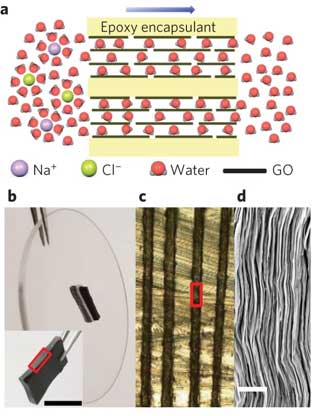
2D materials in the form of suspensions or powders (such as graphene oxide, MXenes, MoS₂ nanosheets) can be engineered into ultrathin membranes with precise pore sizes. These membranes enable selective ion and molecular transport, allowing processes such as desalination, wastewater treatment, heavy-metal removal and gas separation to be achieved with high efficiency and low energy cost.
In nanofluidics, 2D channels constructed in Lego-like fashion from ultrathin crystals allow the study and manipulation of confined liquids and ions. This provides opportunities for biomolecule filtration, dialysis and biosensing applications.
Environmentally friendly applications of this research include plastic-free water purification membranes, antifouling coatings and energy-efficient separation of CO₂ from industrial emissions. This Research Mission directly addresses global challenges in clean water, sustainable industry and environmental remediation, while also supporting medical applications such as filtration of biological fluids for medical diagnostics.
Selected publications
The following publications highlight recent research achievements from our CDT research community working in this mission area.
- Suran, S. et al, Tunable release of ions from graphene oxide laminates for sustained antibacterial activity in a biomimetic environment, Small 21, 2304850 (2025). Graphene oxide laminates with incorporated silver ions (Ag-GO) enable tunable, sustained antimicrobial silver release, maintaining effective activity for many days and addressing long-term infection control challenges.
- Wu, Z. F. et al, Proton and molecular permeation through the basal plane of monolayer graphene oxide, Nat. Commun. 14, 7756 (2023). Demonstration that monolayer graphene oxide exhibits near-complete gas impermeability, while allowing high basal-plane proton conductivity, highlighting its potential for high-performance, chemically tunable proton-exchange membranes.
- Hu, C. Y. et al, pH-dependent water permeability switching and its memory in MoS2 membranes, Nature 616, 7958 (2023). Demonstration that phase-changing 1T′ MoS₂ membranes exhibit pH-dependent hysteresis, enabling stimuli-responsive, memory-like control of water and ion transport, with potential applications in autonomous wound monitoring and smart nanofiltration.