
About this mission
This research mission focuses on the design, synthesis and applications of 2D materials, including membranes, ultrathin crystals or 2D heterostructures to address global energy challenges. By exploiting the unique physical, chemical and electronic properties of atomically thin materials such as graphene, transition metal dichalcogenides and MXenes, we aim to develop next-generation technologies for energy conversion, storage and harvesting.
Research area
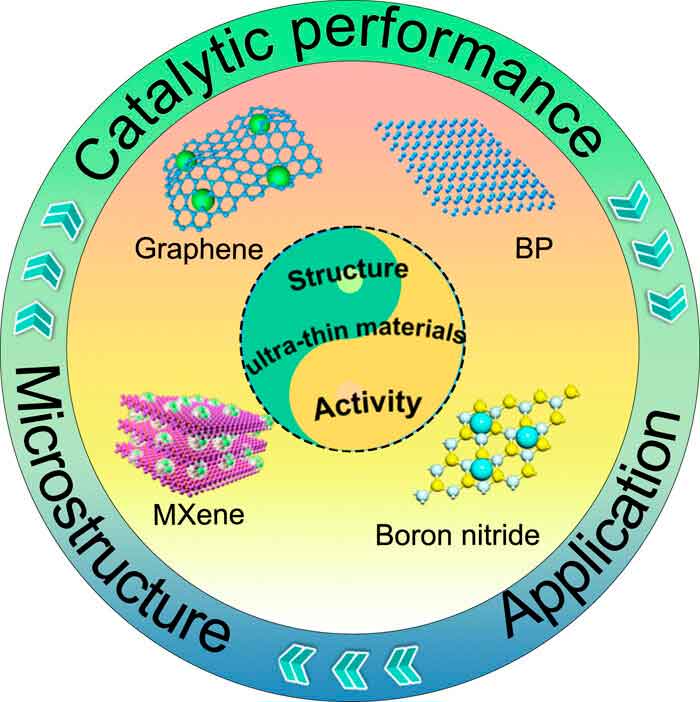
Our ongoing research includes studies of ion intercalation into layered 2D hosts (e.g., Li⁺, Na⁺, Zn²⁺), which is key to next-generation batteries and supercapacitors with high capacity and fast charging, atomically thin catalysts used to enhance the efficiency of solar water splitting and hydrogen evolution, and membranes for sustainable hydrogen production.
Other research examples include the use of 2D membranes as highly selective ion conductors and durable separators, proton exchange membranes for fuel cells, and barrier layers for hydrogen purification and storage. This interdisciplinary field bridges materials science, nanotechnology and renewable energy engineering, offering opportunities to contribute to innovative, sustainable energy solutions with real-world impact.
Selected publications
The following publications highlight recent research achievements from our CDT research community working in this mission area.
- Tong, J., Fu, Y., Domaretskiy, D. et al. Control of proton transport and hydrogenation in double-gated graphene. Nature 630, 619–624 (2024). Demonstration of enhanced proton transport through graphene and its reversible hydrogenation under strong electric fields, important for using graphene as a proton-conducting membrane in, e.g., fuel cells.
- Astles, T., McHugh, J., Zhang R. et al. In-plane staging in lithium-ion intercalation of bilayer graphene. Nat. Commun. 15: 6933 (2024). Demonstration of the fundamental processes involved in lithium intercalation of bilayer graphene and limits on its capacity for lithium insertion, important for using nanoscale derivatives of graphite in next generation Li ion batteries.
- Xu, W. et al Ultrathin transition metal oxychalcogenide catalysts for oxygen evolution in acidic media, Nat. Synthesis 4, 327-335 (2025). 2D derivatives of transition metal dichalcogenides exhibit exceptional stability and catalytic activity for the oxygen evolution reaction in acidic water electrolysers.
- Li, Z. et al, Lithiated metallic molybdenum disulfide nanosheets for high-performance lithium–sulfur batteries, Nat. Energy 8, 84-93 (2023). Demonstration that pre-lithiated metallic 1T-phase molybdenum disulfide (LixMoS₂) serves as an efficient host for high-performance lithium–sulfur batteries, enabling pouch cells to achieve high energy density and excellent stability.
- Wang, S. et al, Cooperative Jahn-Teller effect and engineered long-range strain in manganese oxide/graphene superlattice for aqueous zinc-ion batteries, Nat. Commun. 16: 5191 (2025). Demonstration that highly durable aqueous zinc-ion batteries can be engineered using MnO₂/graphene 2D superlattice, where the cooperative Jahn-Teller effect generates long-range biaxial strains, reducing ion-intercalation stress.