
About this mission
This research mission explores how small amounts of 2D materials can transform the properties of composites and coatings. By leveraging the exceptional mechanical, thermal and chemical properties of 2D materials, we can create materials that are stronger, more durable and multifunctional.
Research area
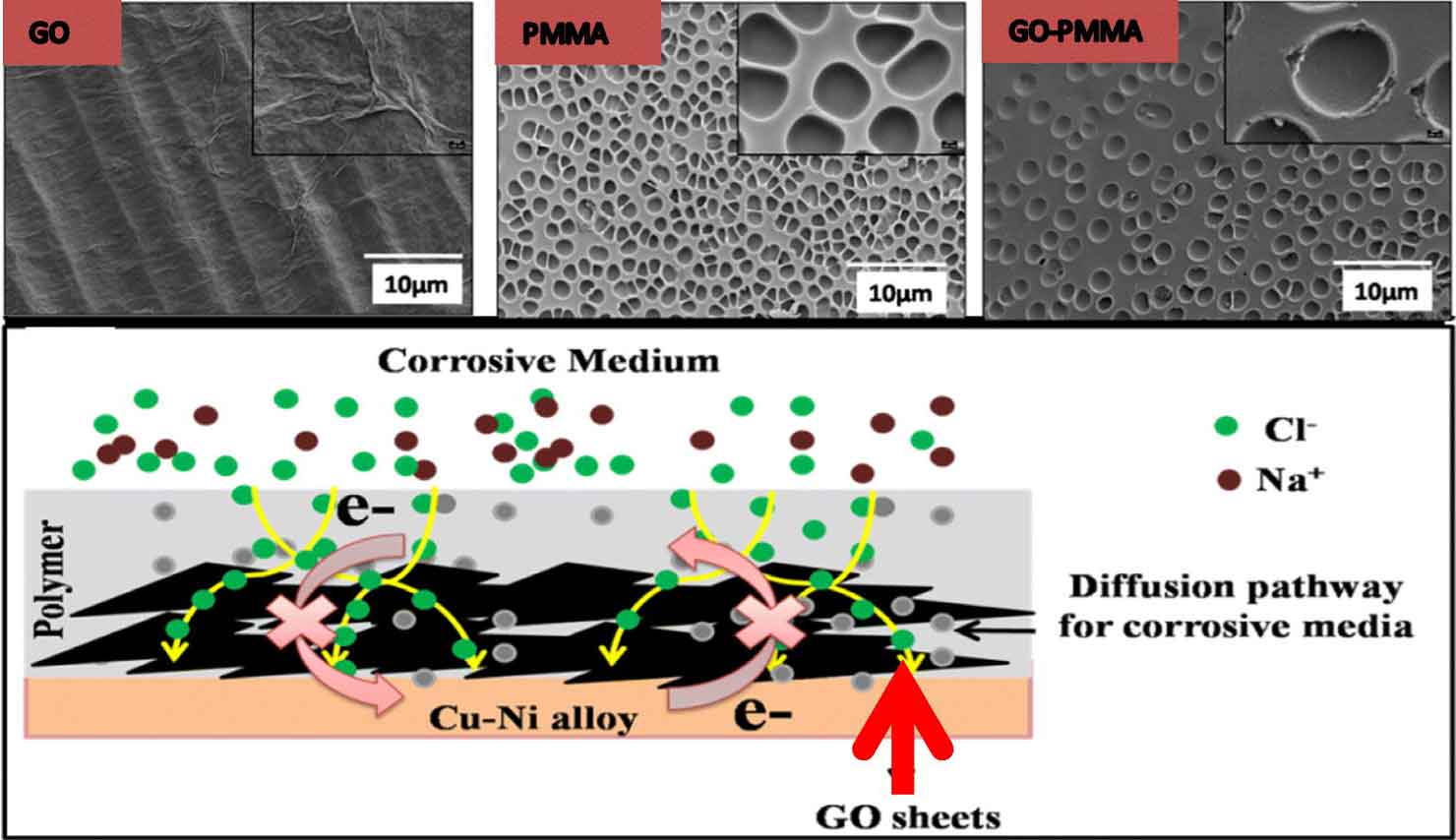
Even a very small amount of a 2D material can transform the properties of another material. The exceptional mechanical, thermal, and chemical properties of 2D materials make them ideal reinforcements in composite systems. Incorporating graphene or MXenes into polymers, ceramics or metals can dramatically improve mechanical strength, toughness, electrical conductivity and barrier properties. In coatings, 2D materials provide superior protection against corrosion, wear, oxidation and electromagnetic interference. For example, graphene-based coatings have been explored for anticorrosion in marine environments, while MXene-based films offer thermal and EMI shielding for electronic devices.
These advances create multifunctional, durable materials for both industrial and consumer technologies. Applications include lightweight structural materials, aerospace composites, automotive parts, fire-retardant and EMI-shielding materials, and flexible conductors.
Selected publications
The following publications highlight recent research achievements from our CDT research community working in this mission area.
- Liu, M, et al. Mechanism of gas barrier improvement of graphene/polypropylene nanocomposites for new-generation light-weight hydrogen storage, Comp. Sci. Tech. 249, 12, 2024, 110483. The development of a robust method to quantify the effective aspect ratio of 2D nanomaterials within a polymer matrix, combining BET surface area and microscopic measurements. This allowed them to demonstrate that reduced graphene oxide (rGO), with a significantly higher aspect ratio than graphene nanoplatelets (GNPs), provides superior mechanical reinforcement and hydrogen barrier performance in polypropylene nanocomposites at much lower filler loadings.
- Huang, Y, et al., Graphene nanoplatelets/epoxy nanocomposites as conductive adhesives for out-of-autoclave in-situ CFRPs repair, Comp. Sci. Tech. 237, 2023, 110007. This study demonstrated that this resistive heating method achieves mechanical performance comparable to conventional oven curing, offering a practical and efficient alternative for carbon fibre reinforced polymer (CFRP) maintenance and repair.
- Liu, M, et al., Deformation of and Interfacial Stress Transfer in Ti3C2 MXene–Polymer Composites, ACS Appl. Mater. Interfaces 2022, 14, 10681–10690. Shows the use of strain-induced Raman spectroscopy to directly probe the mechanical deformation and interfacial stress transfer of Ti₃C₂Tₓ MXene flakes within polymer matrices. This reveals that, unlike graphene, the mechanical reinforcement provided by MXenes is less sensitive to flake thickness, allowing effective reinforcement with thicker flakes and simplifying processing requirements for polymer nanocomposites.