

Our research
Engage in world-leading research in the rapidly growing, multidisciplinary field of two-dimensional materials.
Building on the UK’s pioneering graphene research, we explore applications including novel electronic and spintronic devices, quantum technologies, energy storage and green hydrogen technologies.
Our current research missions
Seven interdisciplinary missions
Our CDT research is organised into seven interdisciplinary missions, each focused on a distinct area of 2D materials research and comprising a number of interlinked PhD projects.
The research missions are listed below. Follow the links to explore each mission’s research area, discover recent research achievements by CDT academic supervisors and view examples of publications.
Individual PhD projects are offered in month three of the first year. They build on these achievements and reflect the latest developments in this rapidly evolving field. Both experimental and theoretical/computational projects will be available.
- Materials Discovery for Quantum Electronics, Novel Heterostructures, Twistronics, 2D Magnets and Superconductors
- 2D Materials and Heterostructures for Adaptive and Energy-Efficient Optoelectronics, Electronics and Thermal Management
- 2D Materials-Based Sensors and Devices
- 2D Materials, Membranes and 2D Crystals-Based Heterostructures for Innovative Energy Applications
- Next-Generation Filtration and Separation Membranes for Nanofluidics and Environmentally-Friendly Technologies
- 2D Material-Enhanced Composites and Protective Coatings
- Physico-Chemical Processes under Strong Confinement, Intercalation and Innovative Synthesis of 2D Materials
Our facilities
Research supported by leading facilities and experts
Our PhD projects benefit from our leading facilities and the expertise of skilled experimental officers and technicians at the following institutes, providing access to advanced technology and specialised labs, enabling pioneering advancements in two-dimensional (2D) materials:
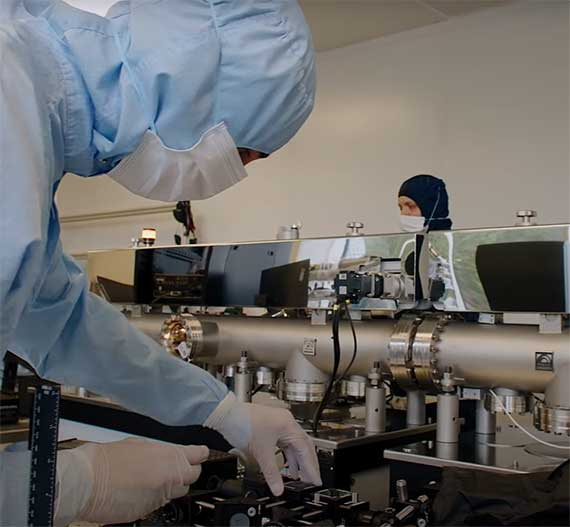
National Graphene Institute, Manchester
The National Graphene Institute (NGI) is a world-leading research centre that facilitates the discovery of early stage-developments through academic and industry collaboration, developing real-world applications of 2D materials.
The NGI provides access to:
- Advanced cleanrooms
- Nanofabrication equipment
- Ultra-high-vacuum robotic assembly
- Specialised characterisation tools for optical, magnetic, and thermal properties.
Additionally, our facilities feature a high-performance computing cluster and innovative labs for membrane and nanocomposite research.

Cambridge Graphene Centre
The Cambridge Graphene Centre offers access to research and development equipment, including:
- Cleanroom nanofabrication
- Cryogenic photoluminescence setups
- Raman spectroscopy.

Henry Royce Institute
The Henry Royce Institute facilitates access to high-resolution microscopy, thin-film processing, atomic layer deposition and spectroscopy equipment. These resources enable detailed material characterisation, precise fabrication and advanced imaging, which are essential for understanding and developing 2D materials.
Watch the National Graphene Institute in action
Tour the National Graphene Institute (NGI)
Take a tour of NGI's Ultra-High Vacuum suite as leading researchers and engineers explore the sophisticated instruments used to drive innovation in 2D materials.
Discover advanced instruments, including electron microscopes, deposition systems and surface analysis tools, enabling academics and industrial partners to collaborate closely on pioneering breakthroughs in 2D material science.
Want to join our research community?
Could you be a part of our next cohort of 2D materials researchers?