
Skip to navigation | Skip to main content | Skip to footer
The University of Manchester home
EPSRC Centre for Doctoral Training in 2D Materials of Tomorrow (2DMoT)
  • EPSRC Centre for Doctoral Training in 2D Materials of Tomorrow (2DMoT)
    • Study
    • Research
    • Apply
    • Partners
    • About
    • Contact us
  • Home
  • Study
  • Research
  • Apply
  • Partners
  • About
  • Contact us
  • EPSRC Centre for Doctoral Training in 2D Materials of Tomorrow (2DMoT)
  • Research
  • EPSRC Centre for Doctoral Training in 2D Materials of Tomorrow (2DMoT)
    • Study
    • Research
    • Apply
    • Partners
    • About
    • Contact us
Two people in protective lab coats using lab equipment

Our research

Joining the EPRSC CDT in 2D Materials of Tomorrow offers you the chance to engage in world-leading research in the flourishing, multidisciplinary area of science and technology of two-dimensional materials.

Our current research missions

#

Building on the UK's pioneering work in graphene, we are expanding into a wide range of 2D materials applications, including novel electronic and spintronic devices, quantum technologies, energy storage, and green hydrogen technologies.

Our CDT research is organised into seven interdisciplinary research missions, each spearheading a particular direction of 2D materials research and comprising a number of interlinked PhD projects. The research missions are briefly described below, including highlights of recent research by CDT academic supervisors. Individual research projects to be offered in month 3 of the first year of your PhD will build on these achievements and reflect the most recent developments in this fast-paced research field. Both experimental and theoretical/computational projects will be available.

This area focuses on identifying and engineering new classes of materials with quantum properties that can be harnessed for advanced electronic and quantum information technologies. Atomically thin materials behave in different ways compared to familiar macroscopic crystals. By stacking them together in Lego-like fashion we can create “designer” quantum materials with a new set of properties, not present in the individual layers. Twistronics — where electronic properties are controlled by twisting adjacent 2D layers at specific angles—has led to discoveries such as magic-angle graphene with unconventional superconductivity and tunable ferroelectrics. The search for 2D magnets (e.g., CrI₃, Fe₃GeTe₂) enables spintronic applications, while atomically thin superconductors may lead to ultra-compact quantum circuits. Research in this area underpins quantum computing, neuromorphic electronics, and ultra-sensitive sensors.

Here we explore how van der Waals and 2D materials can revolutionize the way we use light and heat in technology. Many 2D semiconductors (such as transition metal dichalcogenides, TMDs) absorb light with exceptionally high efficiency, which makes them suitable for flexible solar cells and smart photodetectors, especially when combined with peculiar ferrolectric properties of some of TMD polytypes. At the same time, electrons a holes injected into monolayers of MoS2 efficiently emit light, offering LED functionality compatible with a simultaneous transistor operation. Heterostructures comprising different 2D materials enable one to tailor spectral characteristics and achieve high-performance at low power consumption. This can be combined with the high thermal conductivity of graphene and hBN, which are excellent candidates for heat spreading, thermal barriers, and phonon engineering, contributing to thermal management in electronic and photonic devices. Applications range from smart windows and adaptive displays to tunable LEDs and photodetectors and thermoelectric materials for energy harvesting.

2D materials are extremely sensitive because every atom is sitting on the surface and therefore exposed to the environment. They can detect infrared/THz light, variation of temperature, gases, biomolecules at very low concentrations, or mechanical stimuli, making them ideal for sensors and detectors. For example, a graphene gas sensor can pick up just a few molecules of toxic gases (NO₂, CO). MoS₂-based biosensors can detect DNA strands or proteins, opening doors to wearable health monitors or point-of-care diagnostics. Flexible 2D material-based pressure sensors can be used for wearable electronics. Beyond sensing, 2D materials are also used in transistors, memory devices, flexible circuits, and neuromorphic devices. Their integration with CMOS technologies could enable highly miniaturized, multifunctional sensor networks for healthcare, environmental monitoring, and the Internet of Things.

This research area focuses on the design, synthesis, and applications of 2D materials - in the form of membranes, ultrathin crystals or 2D heterostructures - to address global energy challenges. By exploiting the unique physical, chemical, and electronic properties of atomically thin materials such as graphene, transition metal dichalcogenides, and MXenes, we aim to develop next-generation technologies for energy conversion, storage, and harvesting. Our ongoing research includes studies of ion intercalation into layered 2D hosts (e.g., Li⁺, Na⁺, Zn²⁺), which is key to next-generation batteries and supercapacitors with high capacity and fast charging, atomically thin catalysts used to enhance the efficiency of solar water splitting and hydrogen evolution, and membranes for sustainable hydrogen production. Other examples include 2D membranes as highly selective ion conductors and durable separators, proton exchange membranes for fuel cells, and barrier layers for hydrogen purification and storage. This interdisciplinary field bridges materials science, nanotechnology, and renewable energy engineering, offering opportunities to contribute to innovative, sustainable energy solutions with real-world impact.

2D materials in the form of suspensions or powders (graphene oxide, MXenes, MoS₂ nanosheets) can be engineered into ultrathin membranes with precise pore sizes, enabling selective ion and molecular transport. Such membranes can achieve desalination, wastewater treatment, heavy-metal removal, and gas separation at high efficiency and low energy cost. In nanofluidics, 2D channels constructed in Lego-style from ultrathin crystals allow the study and manipulation of confined liquids and ions, with implications for biomolecule filtration, dialysis, and biosensing. Environmentally-friendly applications of this research include plastic-free water purification membranes, antifouling coatings, and energy-efficient separation of CO₂ from industrial emissions. This research mission directly addresses global challenges in clean water, sustainable industry, and environmental remediation, as well as medical applications such as filtration of biological fluids for medical diagnostics.

Even a very small amount of a 2D material can transform the properties of another material. The exceptional mechanical, thermal, and chemical properties of 2D materials make them ideal reinforcements in composite systems. Incorporating graphene or MXenes into polymers, ceramics, or metals can dramatically improve mechanical strength, toughness, electrical conductivity, and barrier properties. In coatings, 2D materials provide superior protection against corrosion, wear, oxidation, and electromagnetic interference. For example, graphene-based coatings have been explored for anticorrosion in marine environments, while MXene-based films offer thermal and EMI shielding for electronic devices. These advances create multifunctional, durable materials for both industrial and consumer technologies. Applications include lightweight structural materials, aerospace composites, automotive parts, fire-retardant and EMI-shielding materials, and flexible conductors.

When molecules or ions are squeezed between layers of 2D materials, they both change properties of van der Waals compounds and behave in surprising ways themselves. This “nano-confinement” can speed up chemical reactions, change how ions move, make water move at ultrahigh speed, or even stabilize unusual phases of matter. Strong confinement leads to emergent phenomena such as new phase transitions, unusual ion transport, or selective molecular adsorption. Controlled confinement can also be used to catalyze chemical reactions at reduced energy costs. On the synthesis side, innovative techniques such as chemical vapor deposition (CVD), molecular beam epitaxy, or solution-based growth are being refined to produce large-area, defect-engineered 2D materials and their heterostructures. At the same time, intercalation by ions can change optical appearance of materials, leading to adaptive optics systems. This area of research combines fundamental science with scalable manufacturing strategies for practical technologies.

Our facilities

Research supported by leading facilities and experts

Our PhD projects benefit from our leading facilities and the expertise of skilled experimental officers and technicians at the following institutes, providing access to advanced technology and specialised labs, enabling pioneering advancements in two-dimensional (2D) materials:
  • National Graphene Institute in Manchester
  • Cambridge Graphene Centre
  • Henry Royce Institute.
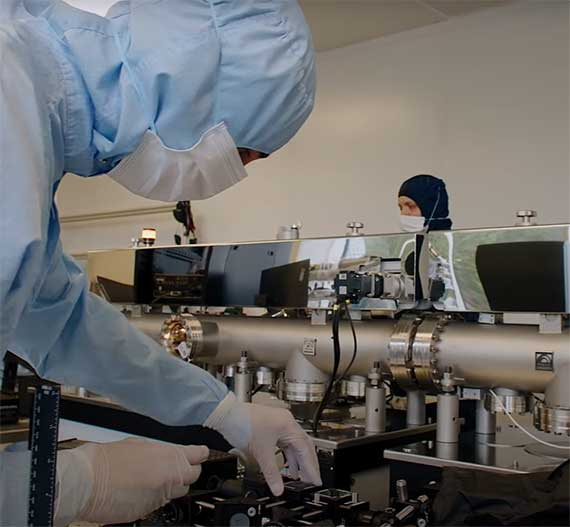
Person operating lab equipment wearing head to toe protective clothing

National Graphene Institute, Manchester

The National Graphene Institute (NGI) is a world-leading research centre that facilitates the discovery of early stage-developments through academic and industry collaboration, developing real-world applications of 2D materials.

The NGI provides access to:

  • Advanced cleanrooms
  • Nanofabrication equipment
  • Ultra-high-vacuum robotic assembly
  • Specialised characterisation tools for optical, magnetic, and thermal properties.

Additionally, our facilities feature a high-performance computing cluster and innovative labs for membrane and nanocomposite research.

Person in a lab wearing a face mask and lab protective clothing that covers the head.

Cambridge Graphene Centre

The Cambridge Graphene Centre offers access to research and development equipment, including:

  • Cleanroom nanofabrication
  • Cryogenic photoluminescence setups
  • Raman spectroscopy.
Man beside a powerful surfacing telescope while looking a the results through a computer screen

Henry Royce Institute

The Henry Royce Institute facilitates access to high-resolution microscopy, thin-film processing, atomic layer deposition and spectroscopy equipment. These resources enable detailed material characterisation, precise fabrication and advanced imaging, which are essential for understanding and developing 2D materials.

Watch the National Graphene Institute in action

Tour the National Graphene Institute (NGI)

Take a tour of NGI's Ultra-High Vacuum suite as leading researchers and engineers explore the sophisticated instruments used to drive innovation in 2D materials.

Discover advanced instruments, including electron microscopes, deposition systems and surface analysis tools, enabling academics and industrial partners to collaborate closely on pioneering breakthroughs in 2D material science.

Want to join our research community?

Could you be a part of our next cohort of 2D materials researchers?

Find out more about our programme

Contact us

  • 2D-materials@manchester.ac.uk

Find us

The University of Manchester
Oxford Road
Manchester
M13 9PL

Connect with us

  • Facebook page for EPSRC Centre for Doctoral Training in 2D Materials of Tomorrow (2DMoT)
  • X (formerly Twitter) page for EPSRC Centre for Doctoral Training in 2D Materials of Tomorrow (2DMoT)
  • YouTube page for EPSRC Centre for Doctoral Training in 2D Materials of Tomorrow (2DMoT)
  • Instagram page for EPSRC Centre for Doctoral Training in 2D Materials of Tomorrow (2DMoT)
  • WordPress page for EPSRC Centre for Doctoral Training in 2D Materials of Tomorrow (2DMoT)

  • Disclaimer
  • Data Protection
  • Copyright notice
  • Accessibility
  • Freedom of information
  • Charitable status
  • Royal Charter Number: RC000797